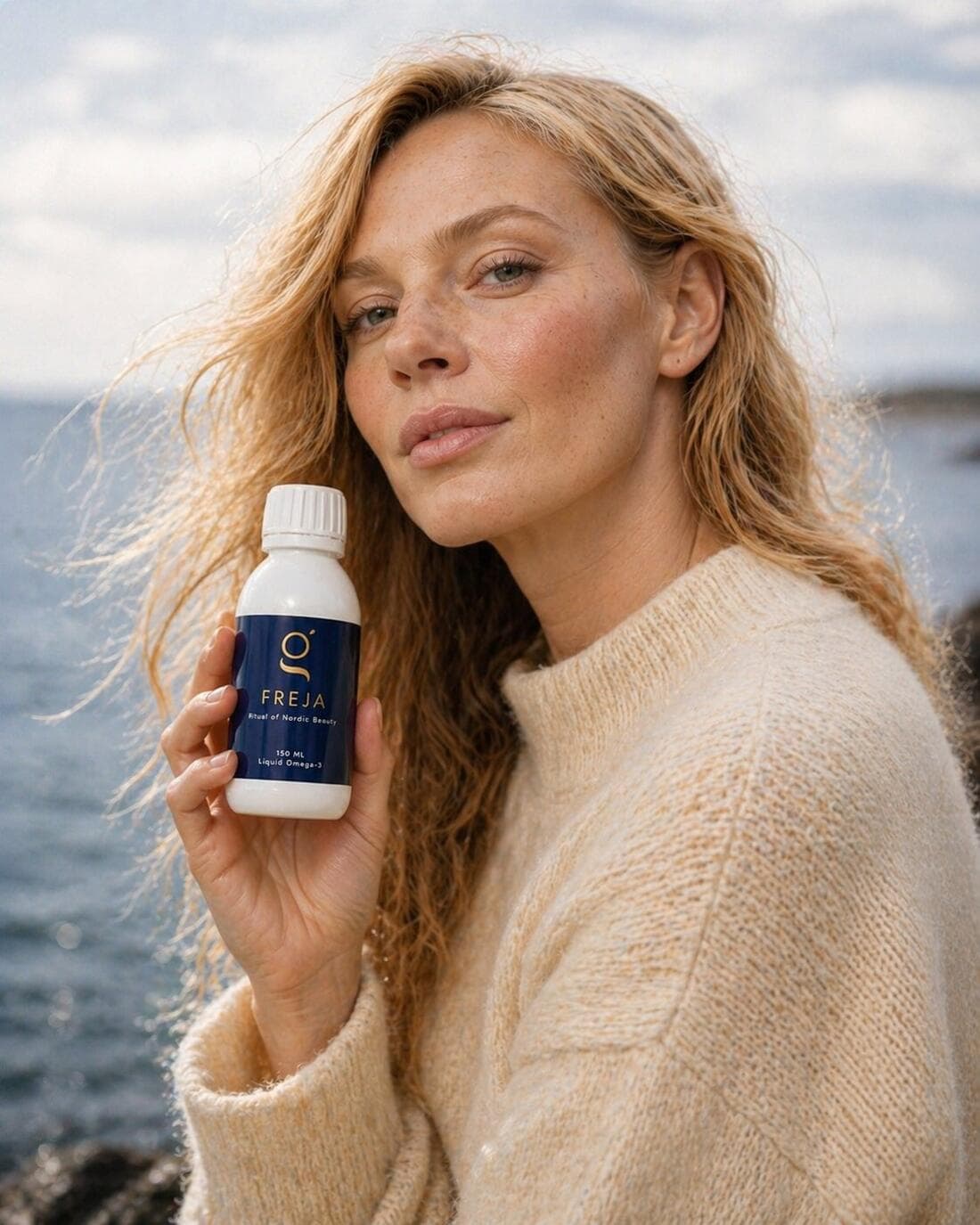

Omega 3 may well be the most underrated nutrient of all. Essential for your heart, your brain and your skin — and yet most people get too little of it.
Omega 3 is an umbrella term for a group of essential fatty acids. Essential literally means: your body can't make them itself. You have to get them from food or supplements. The three most important are ALA, EPA and DHA.
EPA and DHA: the active heroes
EPA supports the natural balance of inflammatory processes and plays a role in your mood and your skin. DHA is a building block of your brain and your eyes, and keeps cell walls supple. Together they form the heart of what makes omega 3 so valuable.
ALA, the plant-based variant from flaxseed for example, your body must first convert into EPA and DHA — and that conversion is very low in most people. That's why what matters most is how much EPA and DHA you take in directly.
Fish or algae?
Omega 3 from fish delivers EPA and DHA directly, in a form the body absorbs well. Algae oil is the plant-based alternative and contains mainly DHA. Both have their place. FREJA, our foundation, is made with premium Norwegian fish for a high, direct concentration of EPA and DHA.
The foundation beneath overall wellbeing — the base on which every other routine rests.
How much do you need?
For most adults, a daily intake of several hundred milligrams of EPA and DHA is recommended. A liquid formula makes it easy: one daily dose, fresh in taste, directly absorbable — without large capsules or a fishy aftertaste.
Sources
- Voedingscentrum: omega-3
- Lavie, C. J., & Bernasconi, A. (2021). Impressive results with EPA, but EPA/DHA combinations also reduce cardiovascular outcomes. Progress in Cardiovascular Diseases, 69, 110–112. doi.org/10.1016/j.pcad.2021.11.00
- Hu, Y., Hu, F. B., & Manson, J. E. (2019). Marine Omega-3 Supplementation and Cardiovascular Disease: An Updated Meta-Analysis of 13 RCTs Involving 127,477 Participants. Journal of the American Heart Association, 8(19), e013543. pubmed.ncbi.nlm.nih.gov/31567003
- Bischoff-Ferrari, H. A., Gängler, S., Wieczorek, M., et al. (2025). Individual and additive effects of vitamin D, omega-3 and exercise on DNA methylation clocks of biological aging. Nature Aging, 5, 376–385. doi.org/10.1038/s43587-024-00793-y
- Troesch, B., Eggersdorfer, M., Laviano, A., et al. (2020). Expert Opinion on Benefits of Long-Chain Omega-3 Fatty Acids (DHA and EPA) in Aging and Clinical Nutrition. Nutrients, 12(9), 2555. doi.org/10.3390/nu12092555
- Liu, Y., et al. (2022). Health Benefits, Food Applications, and Sustainability of Microalgae-Derived N-3 PUFA. Foods, 11(13), 1883. pmc.ncbi.nlm.nih.gov/PMC9265382
- Deckelbaum, R. J., & Calder, P. C. (2020). Is it time to separate EPA from DHA when using omega-3 fatty acids to protect heart and brain? Current Opinion in Clinical Nutrition & Metabolic Care, 23, 65–67. pubmed.ncbi.nlm.nih.gov/32028319
- Watson, R. R. (Ed.) (2014). Omega-3 Fatty Acids in Brain and Neurological Health. Elsevier. books.google.nl
- Fu, Y., Wang, Y., Gao, H., et al. (2021). Associations among Dietary Omega-3 PUFAs, the Gut Microbiota, and Intestinal Immunity. Mediators of Inflammation, 2021, 8879227. doi.org/10.1155/2021/8879227